10 Cosy Winter One-Pot Ideas for Your Clay Pot
Short answer: The best winter dishes for a clay pot are the ones that like slow, moist heat: goulash, bean or lentil stews, sauerkraut stew, root-vegetable bakes, baked rice and whole roasted squash. Fill the pot, put the lid on, start in a cold oven and cook at 160–180 °C for 1–3 hours. The clay does the rest.
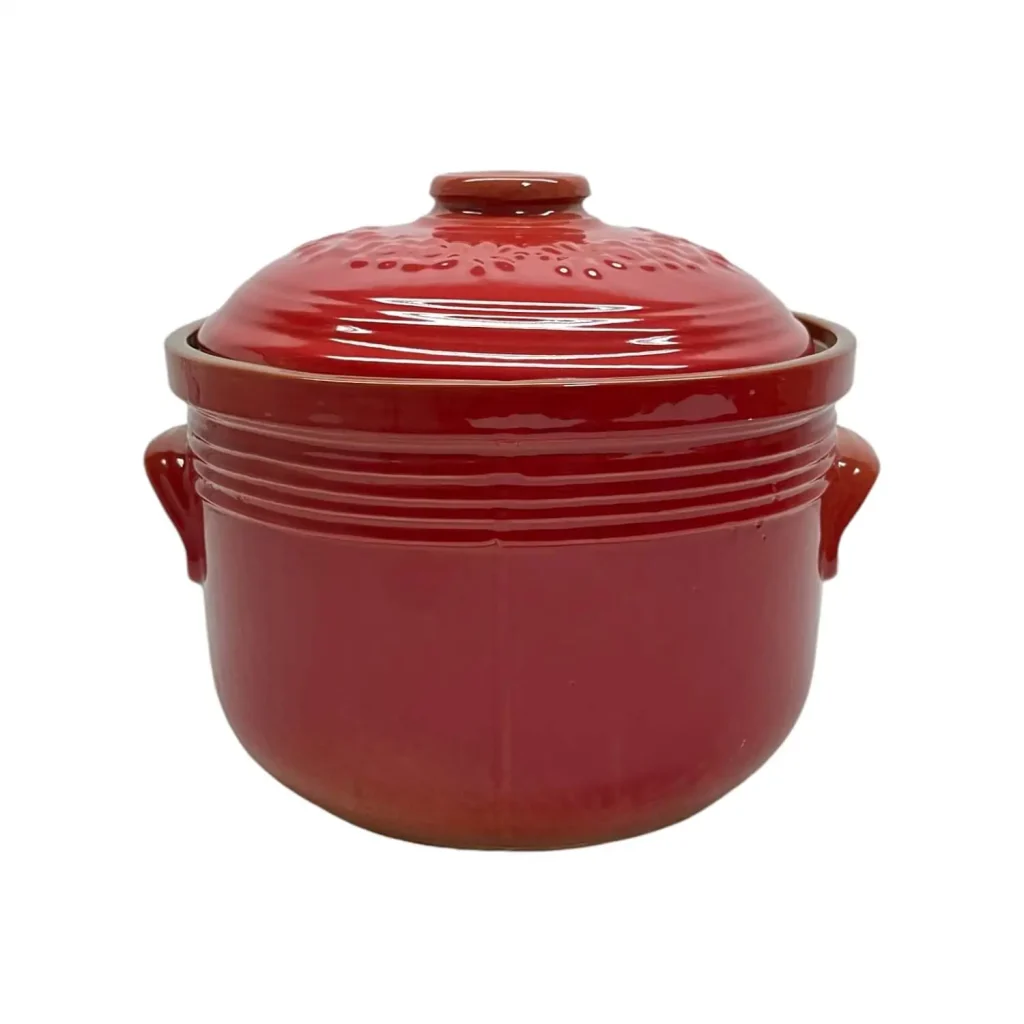
Winter is when clay cookware shines. It heats gently, holds the heat for a long time and keeps the moisture in, so tougher cuts of meat turn tender and pulses become creamy. Here are ten ideas to try in a large lidded clay pot, a natural round clay pot or a large inside-glazed casserole.
1. Beef goulash
Brown cubed beef shin, add plenty of onions, sweet paprika, caraway, tomato paste and a little stock. Cook covered at 170 °C for 2.5 hours. Serve with bread or noodles.
2. Sauerkraut and pork stew
Layer rinsed sauerkraut, pork shoulder, onion, paprika and a spoon of sour cream. Two hours at 170 °C turns it into a classic Central European winter dish. If you ferment your own, see our sauerkraut in a clay crock guide.
3. White bean stew with smoked sausage
Pre-soaked beans, carrot, celery, garlic, bay leaf and smoked sausage, covered with water. Three hours at 160 °C makes the beans silky without stirring.
4. Red lentil and carrot soup
Red lentils, carrots, onion, cumin and stock. One hour at 180 °C, then blend and finish with lemon juice. A quick weekday option.
5. Chicken tagine
Warm spices, preserved lemon and olives make a bright winter dish. The full method is in our chicken tagine recipe.
6. Baked potatoes with garlic and rosemary
Halved small potatoes, whole garlic cloves, rosemary, olive oil and salt in an unglazed pot. Lid on for 45 minutes at 200 °C, then 15 minutes uncovered for colour.
7. Root vegetable bake
Parsnip, celeriac, carrot, beetroot and red onion with thyme and a splash of stock. A meat-free main or a side for roasts. For a creamy version, follow our baked vegetable casserole.
8. Baked rice with mushrooms
Fry onion and mushrooms, add rice and hot stock in a 1:2 ratio, cover and bake at 180 °C for 35–40 minutes. The clay keeps the rice moist and separate.
9. Pork knuckle with beer and onions
Rub the knuckle with salt and caraway, set it on sliced onions, pour in half a bottle of dark beer and cook covered at 160 °C for 3 hours. Uncover for the last 30 minutes at 200 °C to crisp the skin.
10. Baked apples for dessert
Core apples, fill them with walnuts, raisins, cinnamon and honey, and bake in a small lidded dish for 30–40 minutes. The kitchen smells like winter.
Three rules for winter clay cooking
- Always start cold. Put the filled pot into a cold oven and let them warm up together. Our guide to avoiding thermal shock explains why.
- Less liquid than usual. The lid keeps the moisture in; start with less and top up if needed.
- Bread on the side. A crusty loaf soaks up every drop – try our no-knead bread in a clay baker.
Not sure which pot suits you? Read our guide to clay and earthen pots for cooking.
Frequently asked questions
Which clay pot size is best for winter stews?
For four people, a 3–4 litre lidded pot is ideal. For batch cooking or a party, choose a large or giant casserole.
Can I prepare a clay pot stew the evening before?
Yes. Fill the pot, keep it in the fridge overnight, then put it into a cold oven and set the temperature – never into a preheated one.
What oven temperature suits clay pot stews?
Most stews cook well at 160–180 °C for 1.5–3 hours, depending on the meat or pulses.
Do I need to soak my clay pot?
Only if it is unglazed (natural clay). Glazed pots need no soaking.